Case 03
Word of mouth, and nowhere to send it
An independent travel agent in Tiptree, finding every client through personal recommendation and social media. The referrals were there. What wasn't there was anywhere to send them — no home for the business online, and no way to turn "message me for a quote" into an actual enquiry.
The problem
Social media was doing the marketing but couldn't do the converting. Someone interested had to send a message, wait, answer a series of questions one at a time, and only then get anything useful back. Every enquiry began with the same slow exchange before any actual travel planning could start.
A single agent has finite hours. The site needed to do the first twenty minutes of every conversation before the conversation started.
Key decisions
Derive the design from what already existed
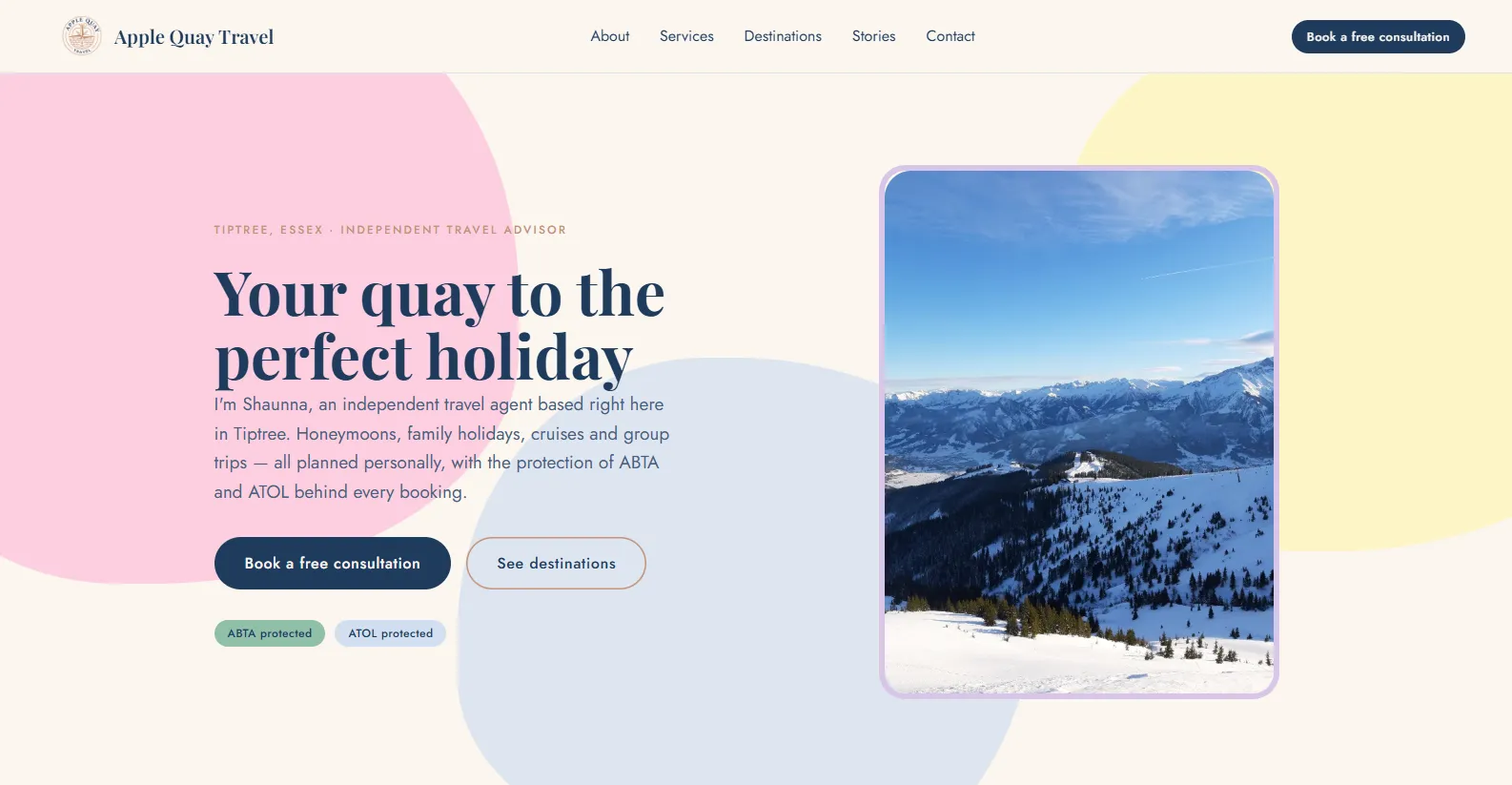
The business already had a look — a logo, a social presence, a recognisable warmth that customers responded to. Rather than rebrand, I sampled the existing assets directly to build a proper design system from them: exact colour values pulled from the logo artwork, typography matched to the existing headline style, and the recurring motifs from the social posts formalised into reusable components.
Customers arriving from Instagram should recognise the site as the same business. A rebrand would have thrown away the only brand recognition the agency had.
One enquiry form that does the qualifying
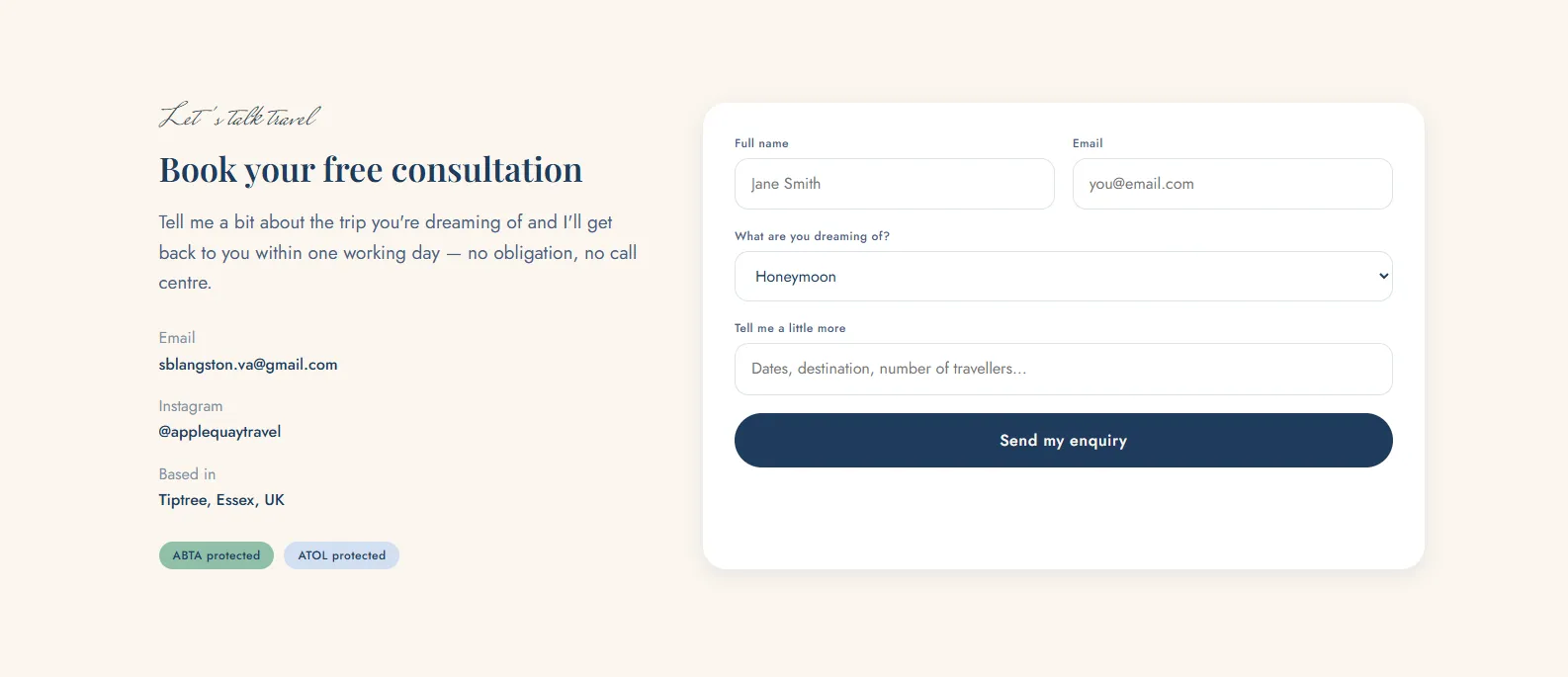
The form asks for everything the agent needs to start work: destination or the fact that they're undecided, rough dates, who's travelling, and budget shape. Not a name-and-message box.
It's a slightly longer form than convention says it should be, and that's the point. It means the first reply is a proposal rather than another set of questions — bookings move faster, and the agent's time goes into planning trips instead of gathering basics.
Build inside the parent company's compliance rules
The agency operates under a larger company, which sets firm limits on what an independent site can say and show — how the business may be described, what claims can be made about pricing and availability, how bookings and financial protection must be represented.
I treated those rules as the brief rather than an obstacle. The design work went into warmth, clarity and the enquiry journey, which were unconstrained, rather than into copy and offers, which weren't.
Design language
Soft, warm and family-facing. The palette came out of the existing logo rather than a mood board, and the whole system is built to feel like a person you'd trust with a family holiday rather than a booking engine.
Working within compliance
Plenty of small businesses operate under someone else's rules — franchises, agencies, regulated trades, anyone trading under a parent brand. It shapes a build more than most people expect:
- How the business may describe itself and its relationship to the parent company
- What can and cannot be claimed about prices, availability and offers
- Required statements around booking terms and financial protection
- Which assets, logos and imagery are permitted, and in what form
Outcome
Word of mouth now has somewhere to land. Enquiries arrive complete rather than as an opening message, so the first reply can be a real proposal — and they arrive overnight and at weekends without anyone needing to be at a phone.
[Placeholder — a couple of sentences in her own words. Do not publish with invented copy here.]
Apple Quay Travel
What I'd do differently
I'd get the compliance requirements in writing before designing anything. Working them out as they surfaced meant reworking copy and layout that were already finished. On any project sitting under a parent brand, franchise agreement or regulator, that document is now the first thing I ask for.
Next case